
Are 365nm UV Flashlights Safe? What Buyers Should Know
A 365nm flashlight emits UVA radiation. The CDC classifies UVA as 315-400 nm, which places 365nm squarely in that range. UVA is not visible to the eye, and visible brightness is not a reliable way to judge exposure.
Do Not Treat a Dim-Looking UV Beam as Harmless
A filtered 365nm flashlight often looks less purple because the filter reduces visible spill. That visual change is useful for fluorescence contrast, but it does not turn the UV into ordinary visible light or tell you that an exposure is safe.
Learn more: Why More Purple Light Does Not Mean More UV Power
Protect Eyes From Direct and Reflected Exposure
Do not stare into the LED and do not aim the beam at another person’s face. Pay attention to mirrors, polished metal, glass, water, and other reflective surfaces that can redirect the beam.
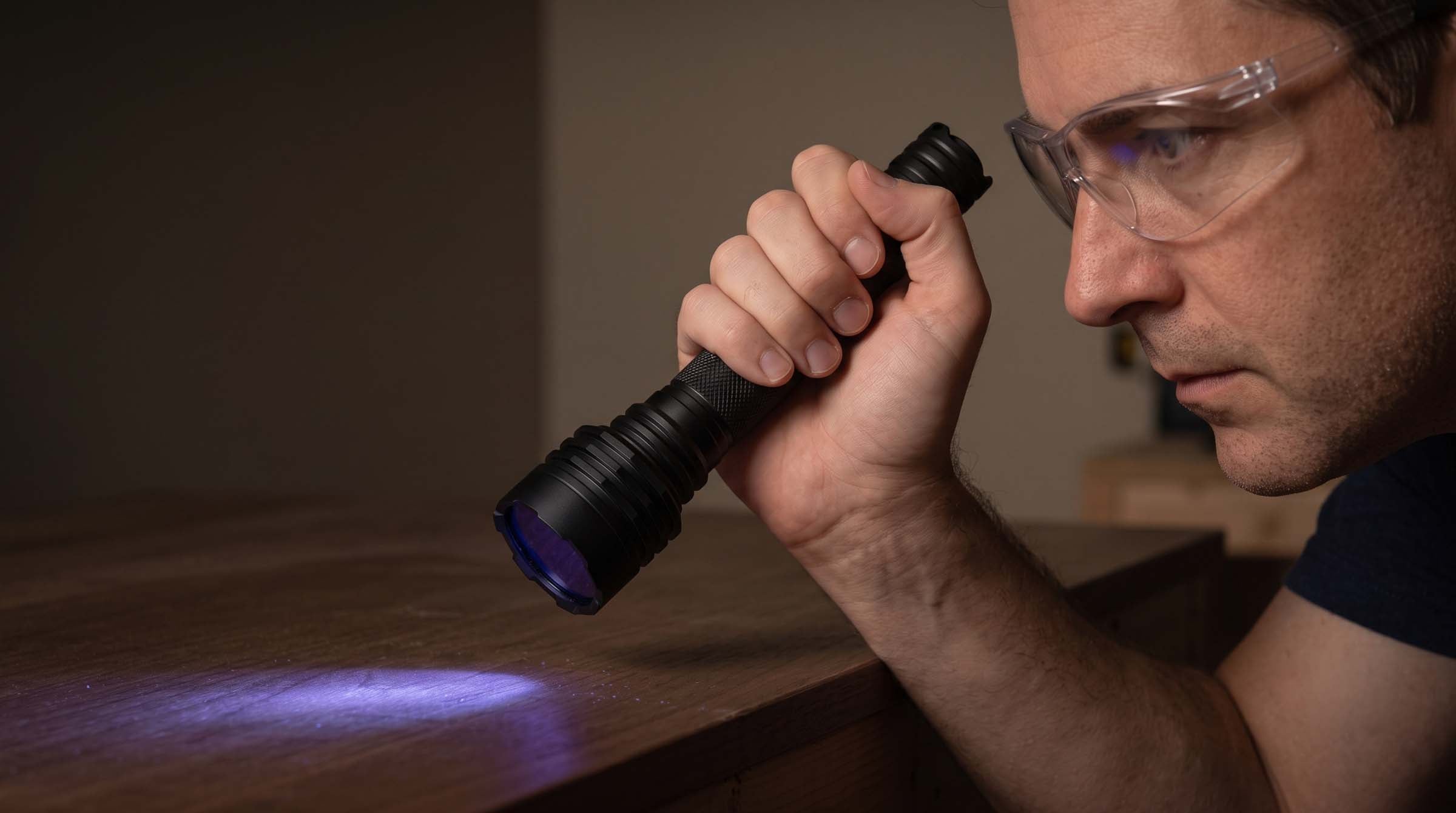
For repeated work, close reflective setups, higher-output lights, or longer sessions, use eye protection that specifically states UV protection appropriate to the task and wavelength. Do not assume that dark tint by itself equals UV protection.
Minimize Unnecessary Skin Exposure
Keep the beam on the inspection target rather than deliberately holding it on bare skin. FDA guidance notes that UV exposure can damage skin, and some medications or topical products can increase sensitivity to UV. Follow product-specific medical guidance if you know you are photosensitive.
Keep UV Lights Away From Children and Pets
A UV inspection flashlight is not a toy. Do not use it to inspect a person or animal. For pet-stain work, aim at the floor, carpet, furniture, or other surface after the animal is out of the beam path.
Use a White Light for Navigation
Outdoors, a UV flashlight helps reveal fluorescent targets but is not a substitute for seeing hazards, terrain, traffic, water, or other people. Carry a normal flashlight or headlamp and use the UV light only for the inspection task.
A Simple Safety Routine
- Aim at the target, not eyes, faces, or bare skin.
- Control reflective surfaces and keep bystanders out of the beam path.
- Use appropriate UV-rated eye protection when the output, duration, repetition, or reflective environment increases exposure.
- Follow the flashlight manufacturer’s safety instructions and stop using damaged equipment.
- Do not claim a “safe exposure time” unless the specific light, distance, irradiance, and applicable exposure standard have actually been evaluated.
The Bottom Line
365nm UV flashlights can be used responsibly, but “365nm” is a wavelength label, not a blanket safety certification. Keep exposure intentional and brief, avoid direct eye exposure, minimize skin exposure, control reflections, and add appropriate protection when the work calls for it.
Sources for Safety Guidance
CDC, Ultraviolet Radiation: UVA spans 315-400 nm; UV exposure can affect skin and eyes.
FDA, Ultraviolet (UV) Radiation: UVA and UVB can damage skin; some medicines and cosmetics can increase UV sensitivity.
Use product-specific instructions and applicable occupational/industrial exposure guidance for professional high-exposure work.